Considered Questions
The questions women actually ask.
What’s the actual difference between a lift and an augmentation?
A lift repositions your own tissue — it addresses where things sit. An augmentation adds volume with an implant or fat — it addresses fullness. A larger implant will not lift what has dropped, and a lift on its own will not add volume. Many women need one, some need both; the 60-second check gives a first, considered read.
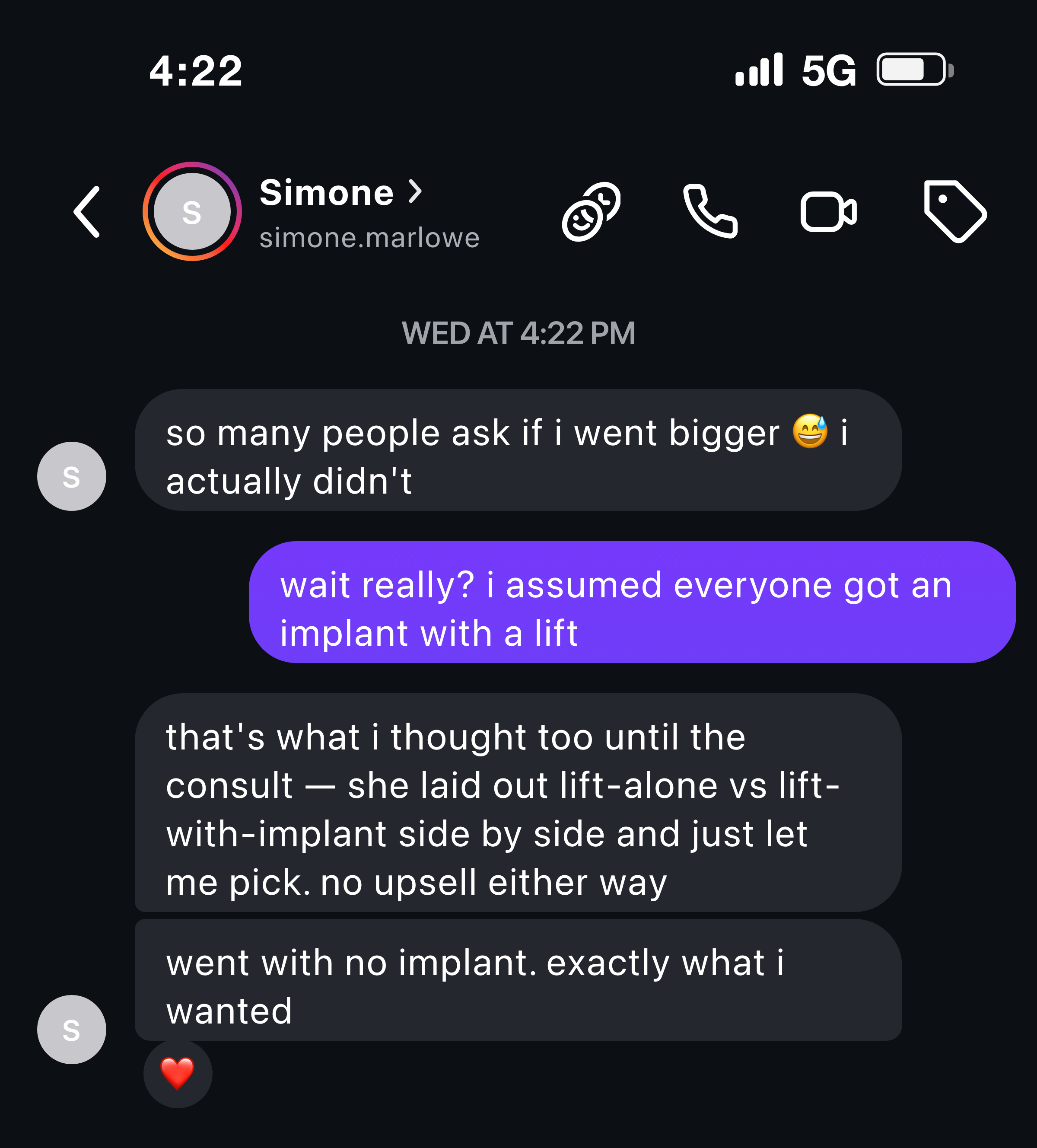
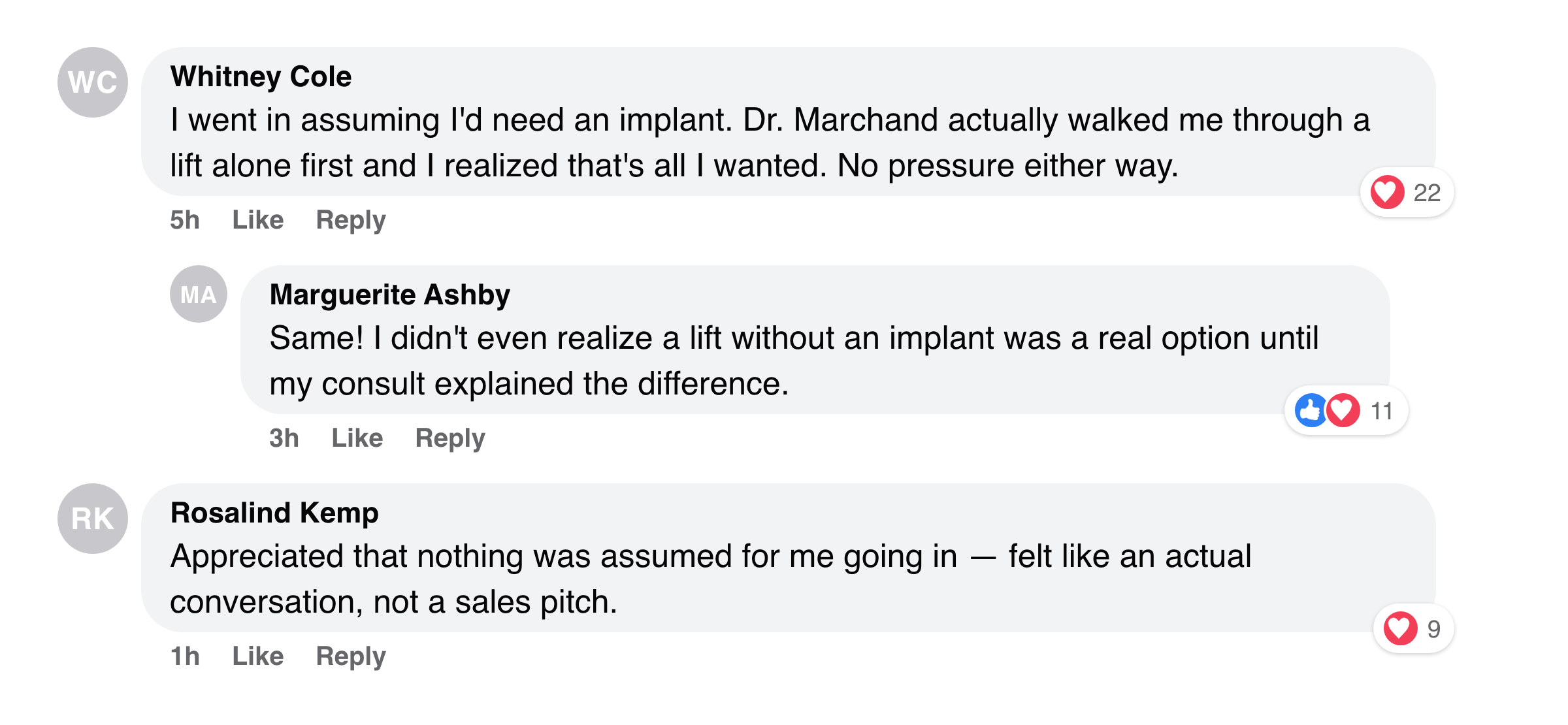
Do I have to get an implant with my lift?
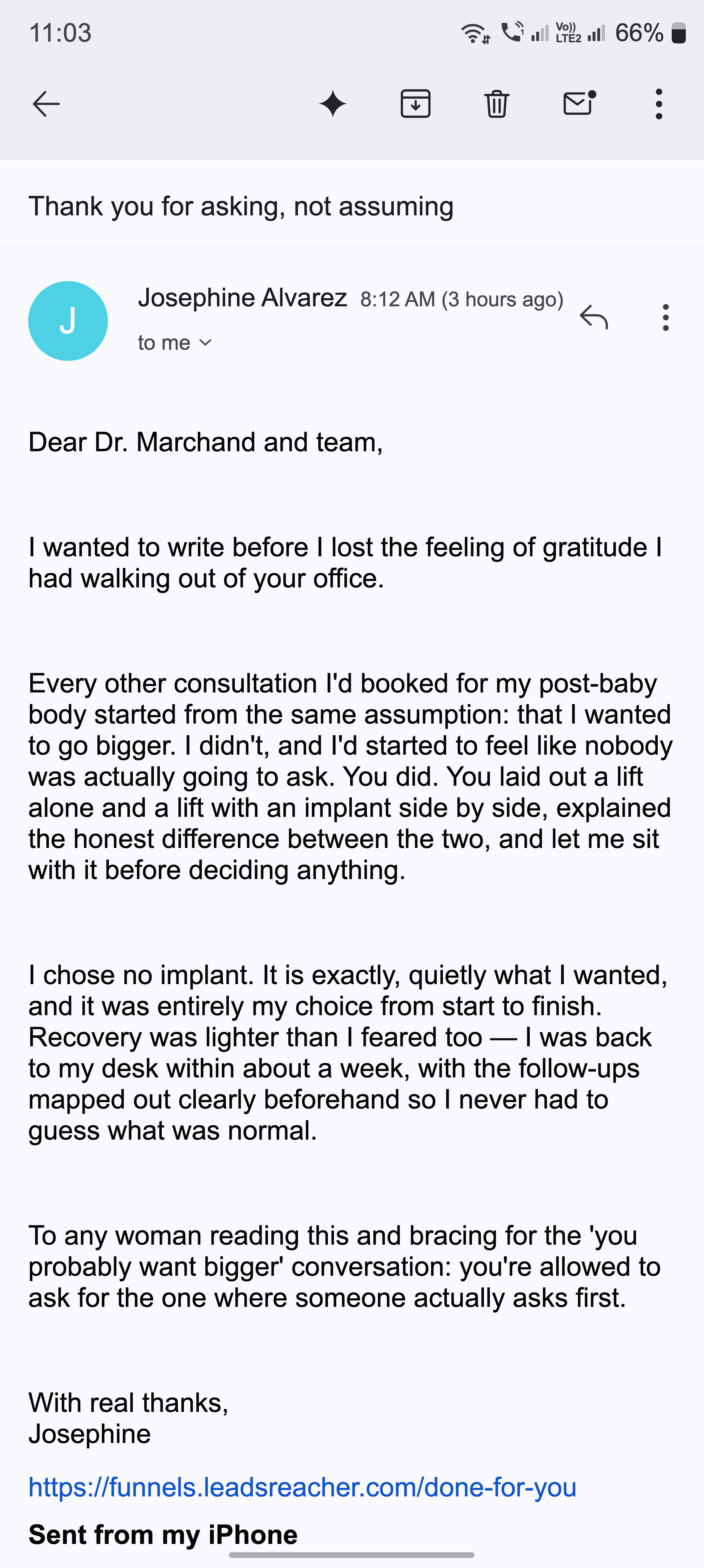
No. A lift alone, using your own tissue, is a complete and common choice — nothing is assumed or upsold. Adding an implant is entirely optional and decided by you, usually after seeing the curated results gallery at consultation.
Will it look natural, or “done”?
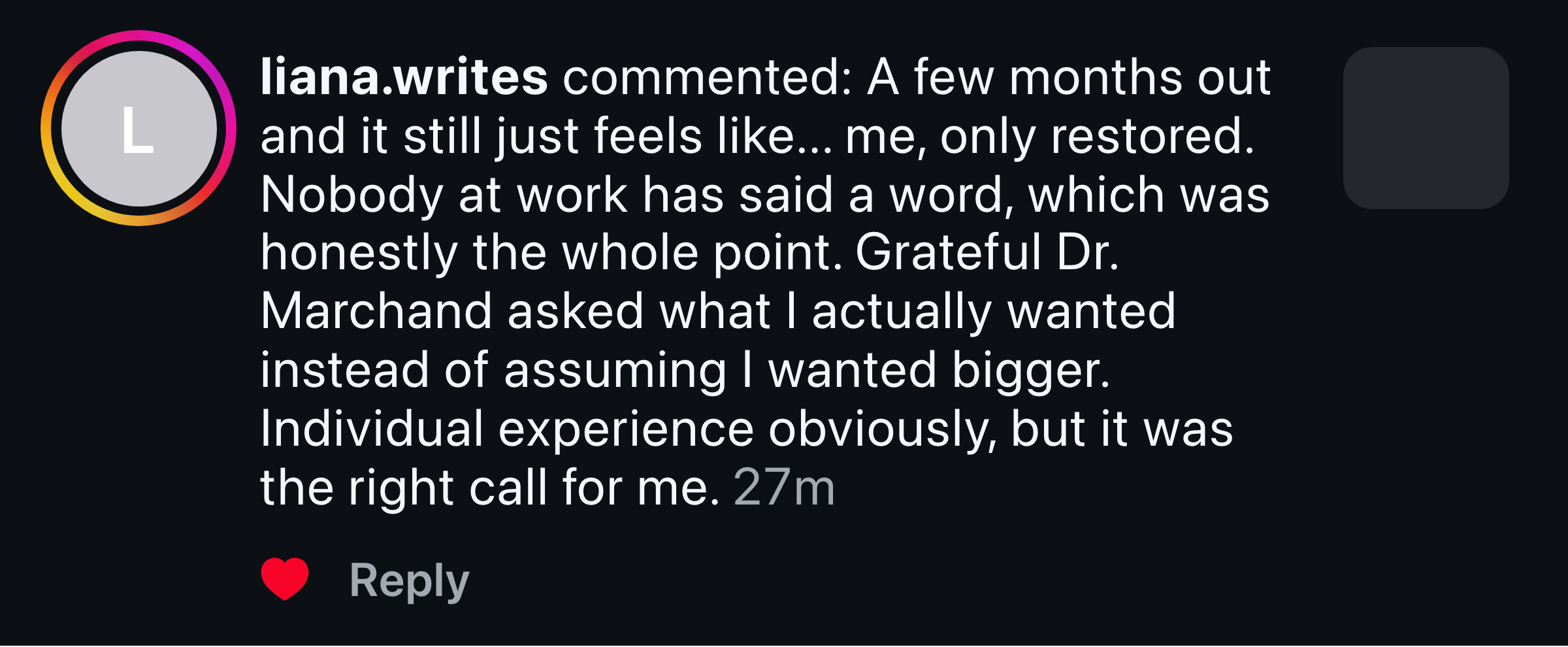
That is the entire philosophy here. Dr. Marchand plans to restore your own proportions rather than to a trend, whether or not an implant is added. The aim is restored and unmistakably still you — not a look that was never yours. Individual results vary.
What will my scars look like?
A lift leaves a scar — typically anchor or lollipop-shaped depending on how much lifting is needed — that fades meaningfully over the first year but never fully disappears. This is named plainly at consultation, not minimised.
Are breast implants safe, if I choose one — and do they last forever?
They are FDA-cleared medical devices with a strong safety record, but they are not lifetime devices — they may need monitoring and eventual revision or exchange. Real risks, including capsular contracture, rupture, and the rare BIA-ALCL linked to certain textured implants, are discussed openly if you add one.
What does the lifetime warranty cover, if I add an implant?
Modern premium implants carry a manufacturer warranty against rupture — a genuine protection, but registration-conditional and specific to the product. At consultation you’ll be told exactly what your chosen implant’s warranty covers and for how long, in plain terms.
Can I breastfeed after a lift?
Many women can, though it isn’t guaranteed for anyone, with or without surgery. If future breastfeeding matters to you, say so — it informs the technique and incision, and it’s discussed candidly as part of your plan.
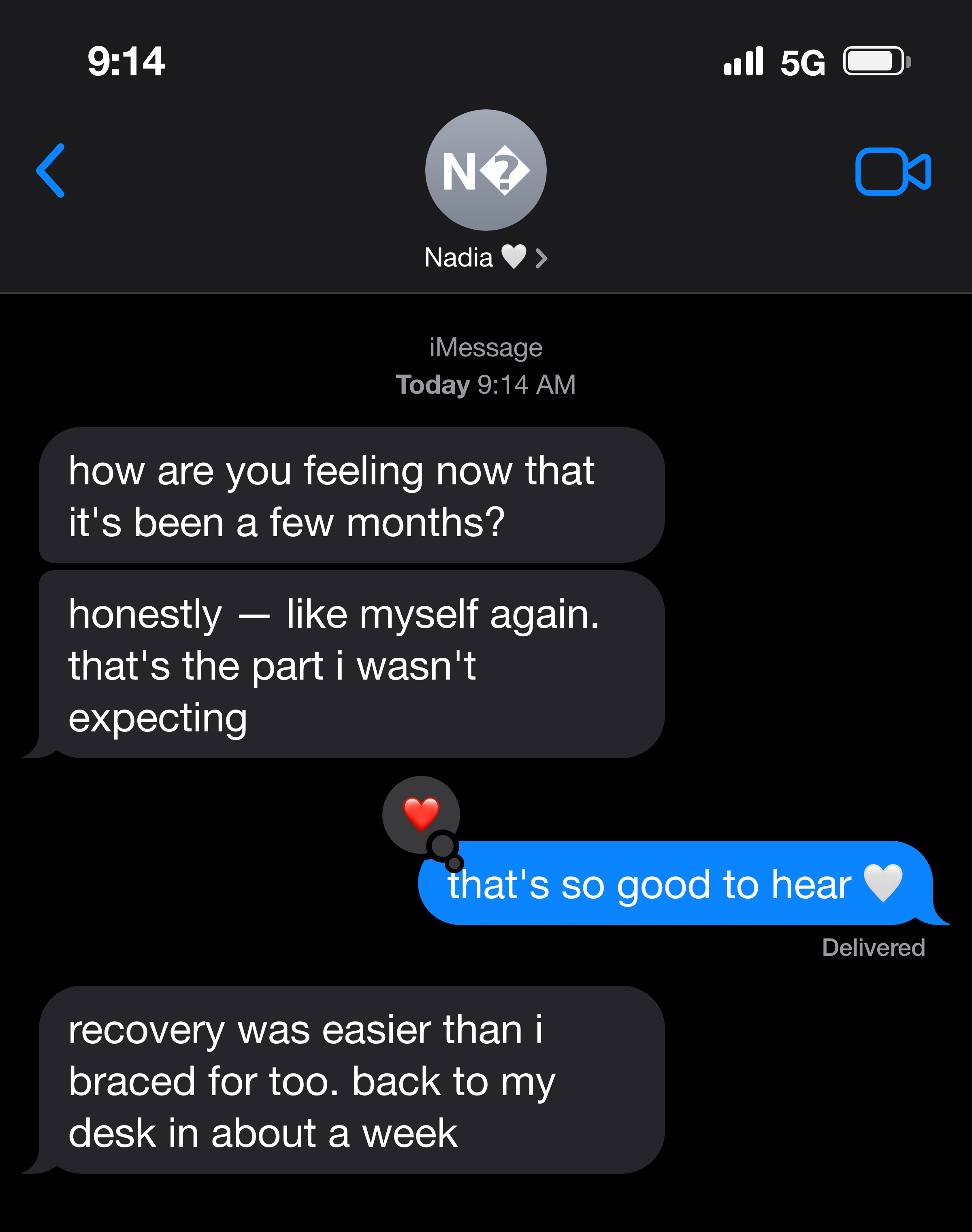
How much recovery are we really talking about?
A lift is a single-region procedure, and for most women recovery is more manageable than expected — many are back to light desk work in around a week, with gentle activity over the following weeks. It’s still real surgery with real anaesthesia and risk, whether or not an implant is added; timelines are typical ranges, never guaranteed.
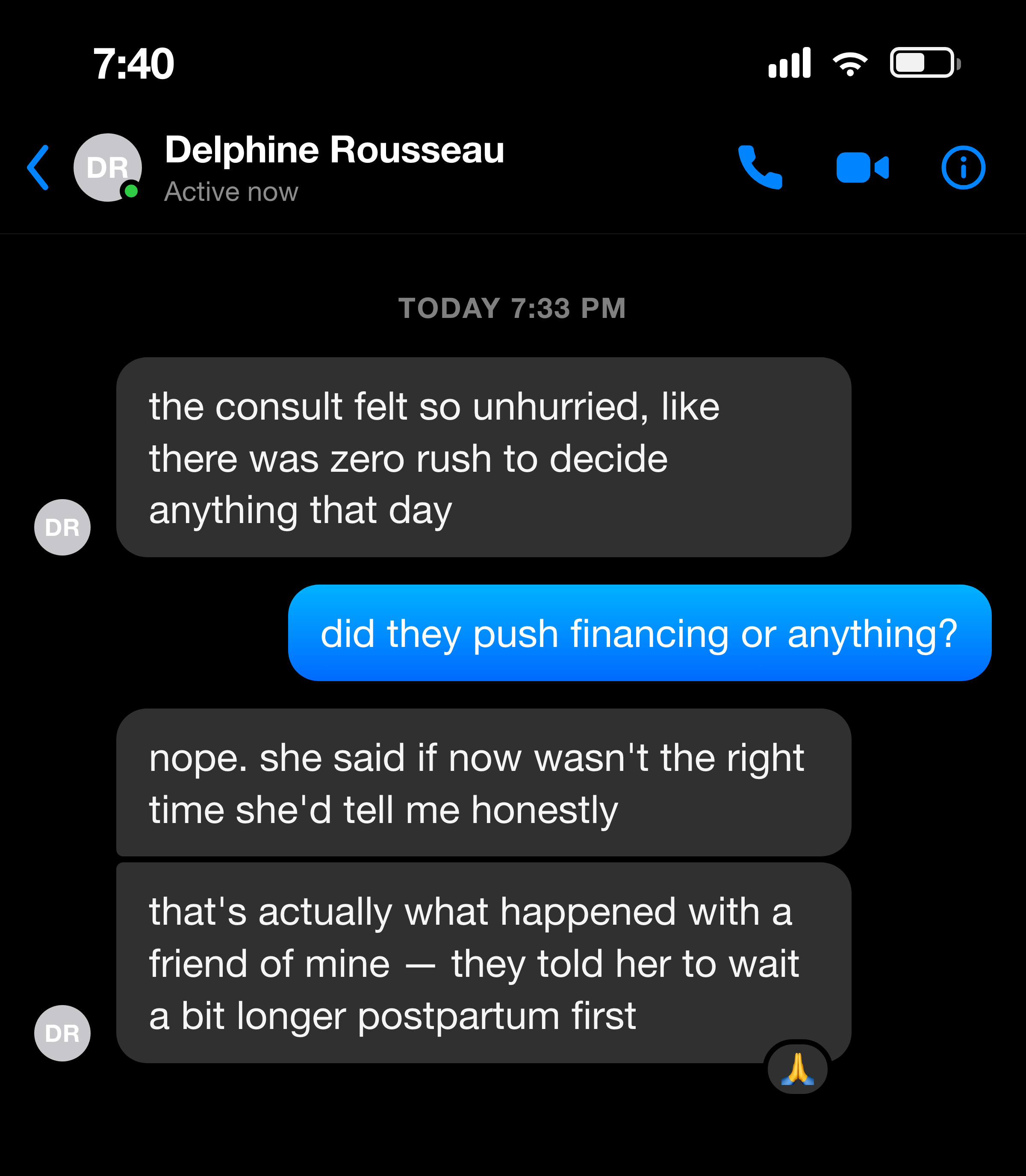
How soon after pregnancy or breastfeeding can I have a lift?
Most women are best served waiting until their shape has settled — usually around six months after finishing breastfeeding, and once weight is reasonably stable. If you are currently pregnant or breastfeeding, or may want more children, Dr. Marchand would rather you wait than plan around a shape that’s still changing.
What if I actually need a reduction, revision, or removal instead?
Then this may not be your page — and that’s useful to know. A reduction for comfort may be insurance-covered and follows a different path; a revision is a different operation for a past result that isn’t right; removal is a valid, personal choice heard without pressure. The 60-second check points you to the right one.
How do I know if I’m even a candidate?
The short 60-second check gives a considered first read. It isn’t a diagnosis — a board-certified surgeon confirms candidacy at your complimentary consultation, for patients 18 and over.